



For several years now, Yayasan Kawan Lama, the foundation under Kawan Lama Group, has been working closely with the Dayak Iban weaving community in Kapuas Hulu, West Kalimantan, through its initiative, Aram Bekelala Tenun Iban. The program is built on a simple conviction: preserving traditional textiles can only be sustainable if it goes hand in hand with the economic independence of the weavers behind them, particularly women.
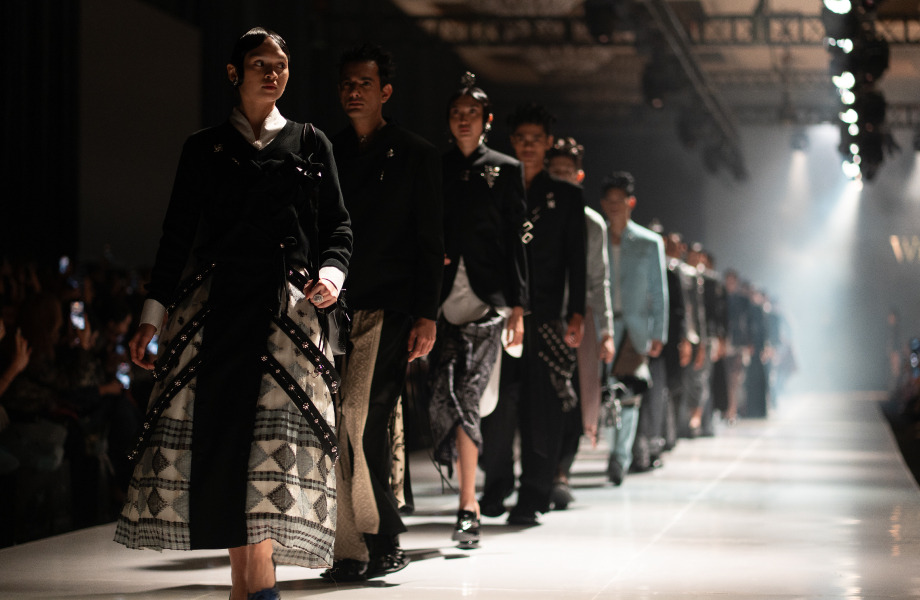
That long-term commitment is now bearing visible fruit. Dayak Iban weaving, crafted through Yayasan Kawan Lama's mentorship, recently graced the runway at designer Wilsen Willim's 10th anniversary show, “Algorithm: Universal Language,” held on 8 July 2026 at the Grand Ballroom, Hotel Mulia Senayan. Its presence among the 60 looks showcased that evening stands as proof that community-driven craftsmanship can hold its own in the language of contemporary fashion, and marks the latest chapter in Yayasan Kawan Lama's ongoing mission to preserve weaving heritage while empowering women weavers in remote West Kalimantan.
Aram Bekelala Tenun Iban: Empowering Women Weavers
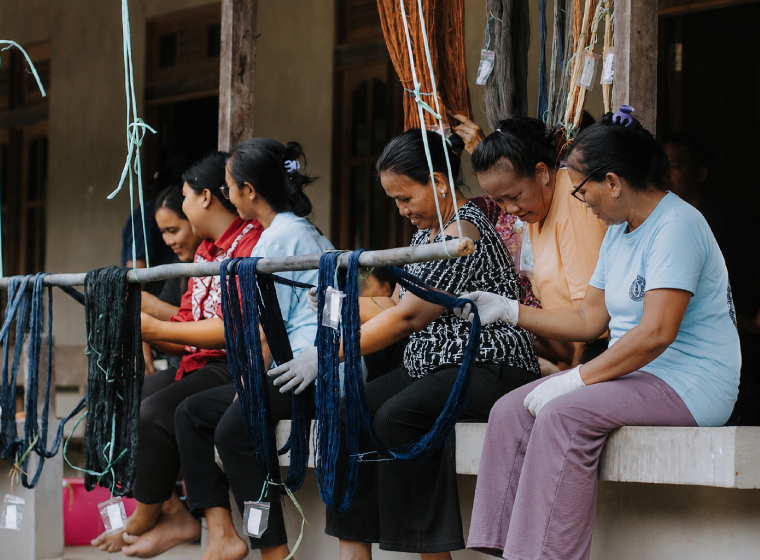
Aram Bekelala Tenun Iban spans four villages in Kapuas Hulu, with three core areas of focus: strengthening weaving techniques, nurturing a new generation of young weavers, and developing new motifs and natural dyes sourced from local materials. The program builds on an ongoing collaboration with Cita Tenun Indonesia (CTI) through a Training of Trainers (ToT) approach, in which dozens of women weavers are trained as local facilitators who then pass their skills on to hundreds of others within their communities.
This community-led model has proven effective. As of mid-2025, the program had reached more than 100 active weavers, a milestone that reflects the strength of the grassroots, community-driven approach that defines Aram Bekelala Tenun Iban.
One of the program's most notable innovations lies in its exploration of natural dyes from local plants such as ketapang (tropical almond), peat-sourced pigments, and kratom leaves. Since early 2025, this effort has expanded the weaving palette from six to 69 colors, drawn from 23 local plant species, further strengthening the distinct identity of Dayak Iban textiles that sets them apart from weaving traditions elsewhere in Indonesia.
Real Economic Impact: Weavers' Income Up by 360%
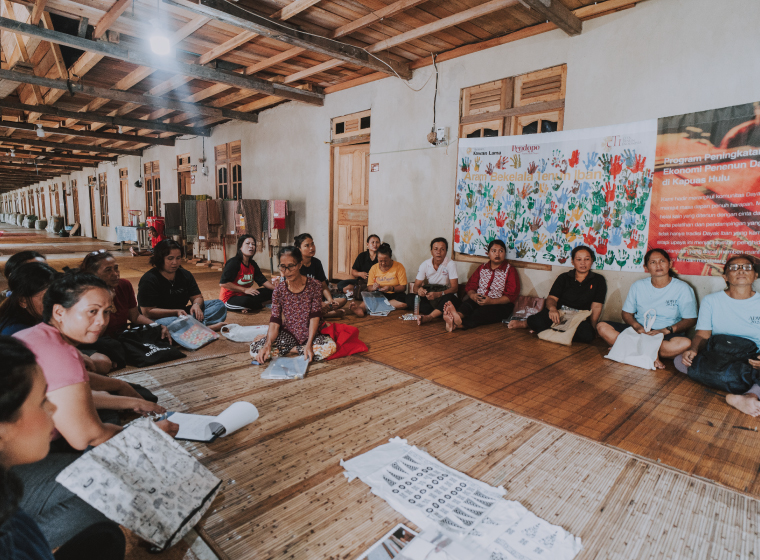
What makes this program stand out is not only its cultural preservation efforts, but its tangible economic outcomes. Within a single year of implementation, Aram Bekelala Tenun Iban recorded an average income increase of up to 360% among participating weavers, driven by intensive training in weaving techniques, natural dyeing, financial literacy, and marketing strategies.
That impact is felt directly by the weavers themselves. Kristina Anyun, one of the program's participants, has shared how the training she received not only improved the quality of her weaving, but also built her confidence to manage and market her own work independently.
Beyond economics, the program also touches on social development, encouraging access to basic education and cultural literacy for weavers' children, helping ensure the tradition of weaving is carried forward by the next generation.
From Local Roots to National and International Stages
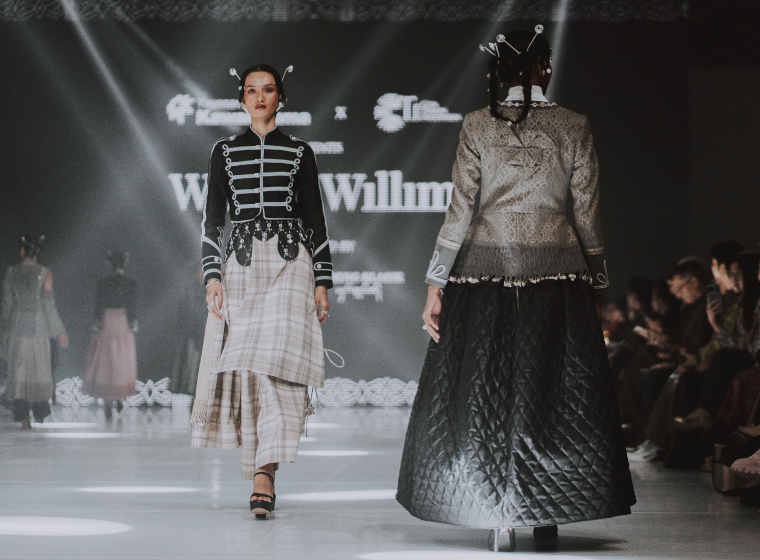
Yayasan Kawan Lama has brought its Dayak Iban weaving to a string of notable stages. After appearing in the "LIMINAL" showcase with Cita Tenun Indonesia at Jakarta Fashion Week 2026 in late October 2025, the weaving also earned recognition at Fashion Nation XIX and World Expo Osaka 2025. That momentum now continues through the collaboration with Wilsen Willim on “Algorithm: Universal Language,” a collection celebrating the designer's decade-long career, where Dayak Iban weaving appeared alongside three other Indonesian textiles — Garut silk weaving, Jembrana songket from Bali, and Minang songket from Halaban — in contemporary silhouettes with a rebel-punk edge.
This series of appearances demonstrates that the results of Yayasan Kawan Lama's community empowerment work are not merely a social-good story but genuine craftsmanship capable of holding its own in the national and global fashion industry.
Closing the Loop: From Community to Retail
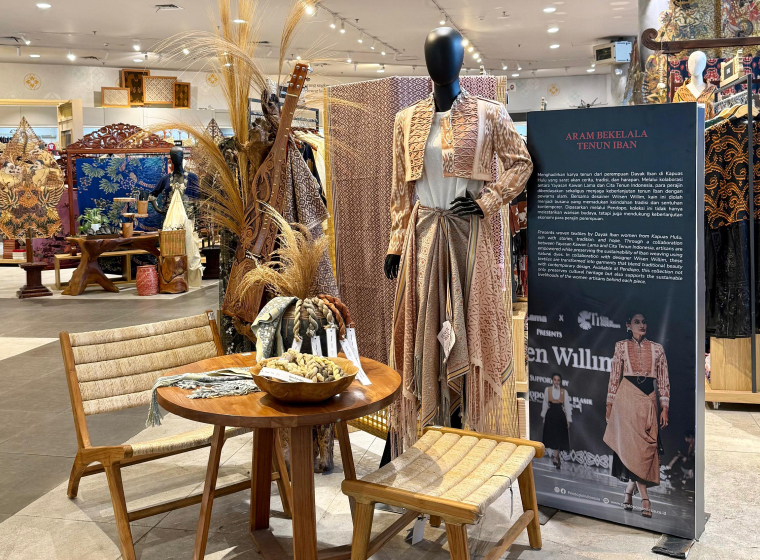
For Yayasan Kawan Lama, appearing on major fashion stages is not the end goal, but a bridge toward sustainable economic independence. To broaden market access, Dayak Iban weaving produced through this program is also available at Pendopo, home to more than 300 local MSMEs under Kawan Lama Group. This model ensures that every purchase not only celebrates the beauty of local craftsmanship but also directly contributes to the sustainability of the weaving community in Kapuas Hulu.
Looking ahead, Aram Bekelala Tenun Iban will continue as a long-term initiative for Yayasan Kawan Lama, with 2026 priorities centered on strengthening design quality, exploring new natural dyes, and building the marketing and business-planning capacity of its weaver participants.
Through cross-sector collaboration with designers, local governments, and Kawan Lama Group's retail ecosystem, Yayasan Kawan Lama continues to demonstrate that preserving traditional textiles and empowering women can go hand in hand with contemporary fashion innovation, paving the way for a more inclusive and sustainable circular economy for Indonesia's weavers.