



Starting from the potential of Dayak Iban weaving as a leading local commodity in Kapuas Hulu, the Aram Bekelala Tenun Iban program—an initiative by the Kawan Lama Foundation—was established as a women’s empowerment effort that connects cultural preservation with local economic strengthening.
Implemented across four hamlets, the program focuses on enhancing the capacity of women weavers through structured training, culturally based product development, and expanded access to sustainable markets to strengthen the community’s economic independence.
Income Increased by Up to 360%
Within one year of implementation, the program recorded a significant improvement in the welfare of Dayak Iban weavers, with average incomes increasing by up to 360%. This achievement was driven by structured training and ongoing mentoring covering advanced weaving techniques, natural dyeing methods, financial literacy, and marketing strategies.
The program also encourages weavers to become local facilitators through a Training of Trainers (ToT) scheme, while engaging younger generations in locally based cultural and environmental education to ensure the sustainability of the Dayak Iban weaving tradition.
Tasya Widyakrisnadi, Chairperson of the Kawan Lama Foundation, stated, “The Aram Bekelala Tenun Iban program is designed as a long-term initiative to strengthen the independence of the Dayak Iban weaving community. Through capacity building, continuous mentoring, and expanded market access, we aim to ensure that cultural preservation goes hand in hand with economic empowerment, so the program’s benefits can be sustainable.”
Sukardi, Vice Regent of Kapuas Hulu, added, “This program creates opportunities for women weavers to enhance their skills and economic independence. Dayak Iban weaving is not merely a cultural identity but also a source of livelihood that must continue to be developed to sustainably improve community welfare.”
One of the assisted weavers, Kristina Anyun, said that the program has brought meaningful change to her and her community, “We not only learned how to improve the quality of our weaving but also gained greater confidence in managing and marketing our products. Now, we feel equipped to independently grow our weaving business.”
Product Innovation and Global Recognition
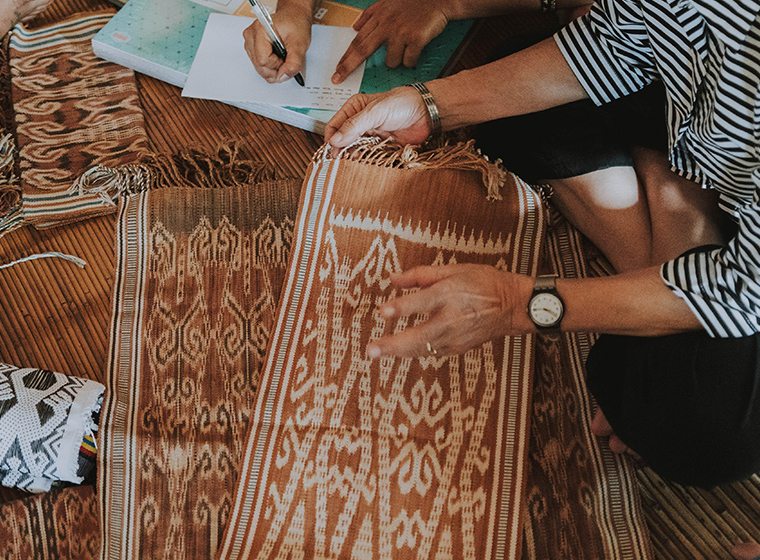
From a product development perspective, the Aram Bekelala Tenun Iban program promotes design innovation and natural dyeing techniques based on Dayak Iban cultural values. These innovations include the development of five new motifs and the documentation of 58 weaving motifs as part of cultural preservation efforts.
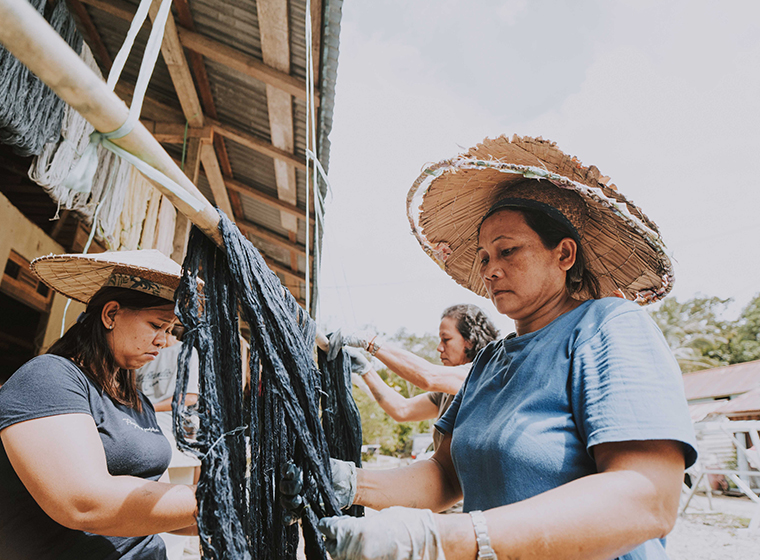
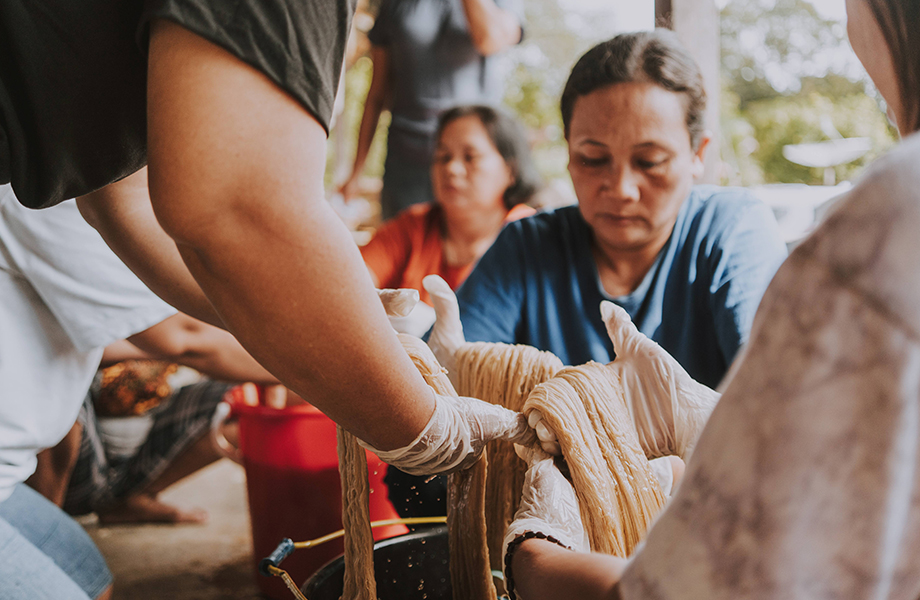
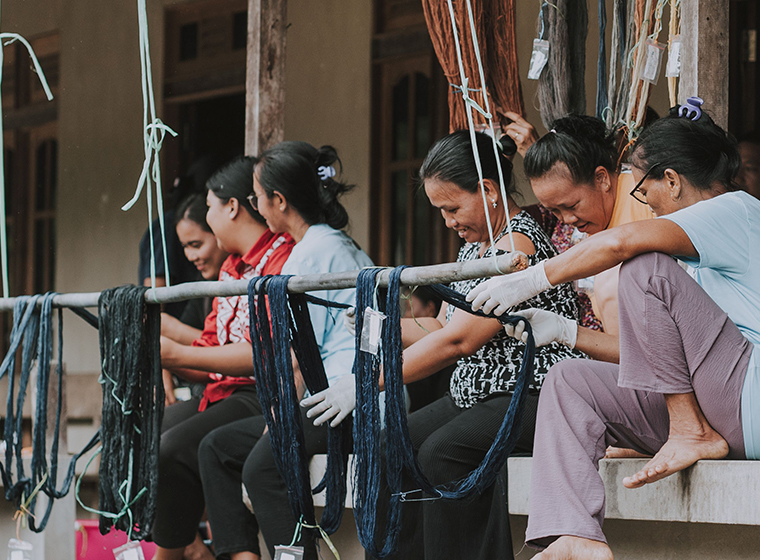
The natural dyeing techniques were also expanded from six to 69 color variations derived from local plants such as ketapang leaves, kratom leaves, tebelian wood, and 20 other species. These innovations not only enhance product quality and competitiveness, but also create opportunities for new job creation and the development of a community-based natural dye industry.
The assisted weaving products have received national and international recognition through participation in several prestigious events, including Fashion Nation XIX, Jakarta Fashion Week 2026, and World Expo Osaka 2025, as well as collaborations with Cita Tenun Indonesia and designer Wilsen Willim. To further expand the market, the program supports weavers through curation process and exploration of distribution channels at Pendopo as part of strengthening the cultural product value chain.
Sustainable Commitment
Going forward, the Aram Bekelala Tenun Iban program will continue as a long-term initiative of the Kawan Lama Foundation. In 2026, the program will focus on strengthening weaving quality through design and technical development, exploration of new natural dyes, and enhancing weavers’ marketing and business planning capacities.
“We believe that culturally based women’s empowerment is a key foundation for creating inclusive and sustainable economic opportunities,” stated Tasya.