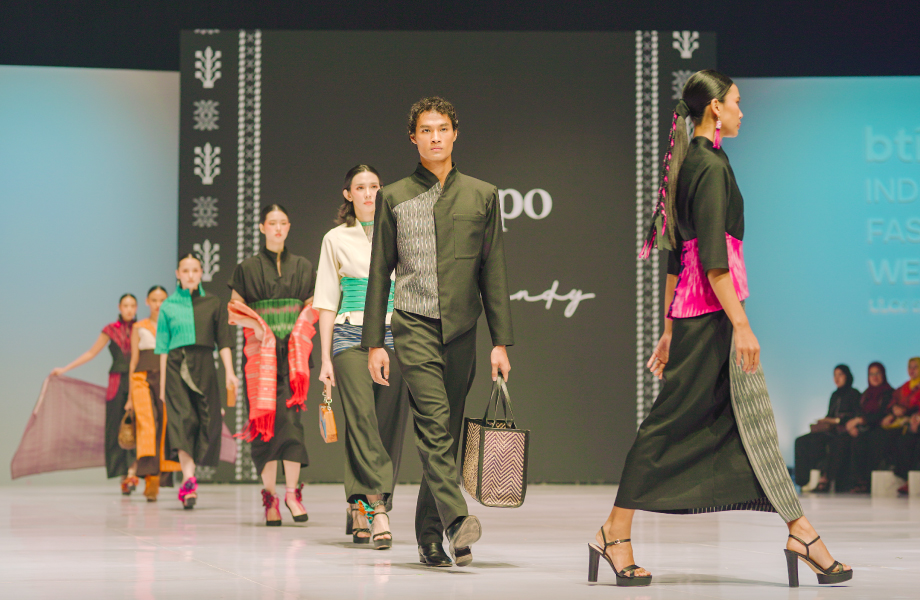




There's a pulse that never stops flowing from one generation to the next, and that pulse is exactly what Pendopo and designer Julia Orlandy set out to capture in "Nadi di Tondi: Denyut Tradisi dalam Jiwa Masa Kini" ("The Pulse of the Soul: Tradition's Heartbeat in the Modern Spirit"), showcased at Indonesia Fashion Week (IFW) 2026 in Jakarta. The nine looks presented weren't just garments — they were nine stories woven from Ulos, a wastra long tied to Batak ceremonial tradition, now given room to walk further into everyday life.
A Philosophy as the Starting Point
The name "Nadi di Tondi" wasn't chosen at random. In Batak culture, tondi refers to the soul, spirit, and inner strength that accompanies every human being, while nadi describes the pulse of life that keeps moving forward. The collection grows out of this pairing, an attempt to capture how tradition keeps flowing rather than staying frozen in the past, living on instead in every generation that carries it forward. The designs also draw from Mangulosi, a traditional ceremony in which a Ulos is draped over someone as a symbol of blessing, affection, protection, and respect — translated here into formal silhouettes with asymmetric details and turtleneck accents.
Julia Orlandy, the designer behind the collection, spoke about her intention to present Ulos in a new light. "Through 'Nadi di Tondi,' I wanted to show that Ulos has vast room to keep evolving without losing its meaning. Every look is born from respect for tradition, yet translated into a more contemporary design language so it can be worn across many moments of modern life," she said.
Nine Looks, Nine Chapters of Life
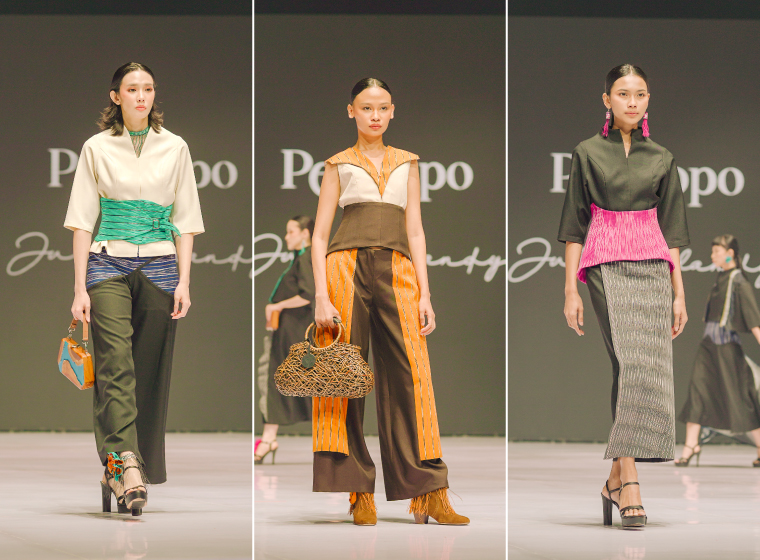
What makes the collection compelling is that it doesn't stop at a single meaning. Each of the nine looks represents a different chapter in the Batak philosophy of life, beginning with Tondi as a symbol of soul and inner strength, followed by Hamajuon representing progress, Holong as affection, Hasangapon symbolizing honor, and continuing with Pardomuan on unity and Horas as a prayer for health and happiness. The narrative then moves through Ragidup, depicting the dynamics of life, Pasu-pasu as a symbol of blessing, before closing with Hagabeon, representing the continuity of generations.
Presented through a range of Ulos motifs, Sibolang Rasta, Sibolang Rasta Marliris, Mangiring, Tutur-tutur, and Simarpisoran, these nine chapters invite the audience on a journey through human life itself, from the birth of the soul to the legacy passed down to the next generation.
The Colors, the Weave, and the Hands Behind It
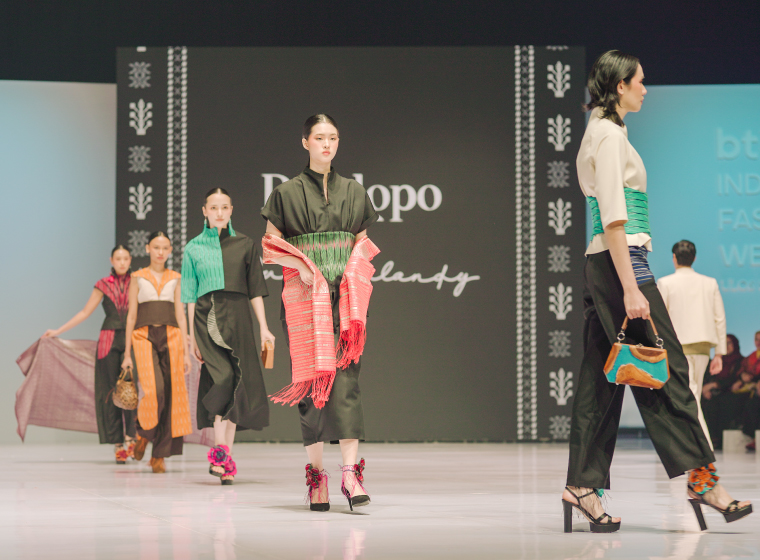
Visually, the collection unfolds in a varied Ulos color palette paired with plain black fabric, striking a balance that feels elegant despite its rich colour palette. That pairing reflects the cultural depth of Sumatra, reinforced by semi-wool materials and tailored construction that reframes Ulos through a more modern lens. Every piece of Ulos used was hand-woven by local artisans, a lengthy process that makes each look not just a design achievement, but also the product of patient, skilled handiwork.
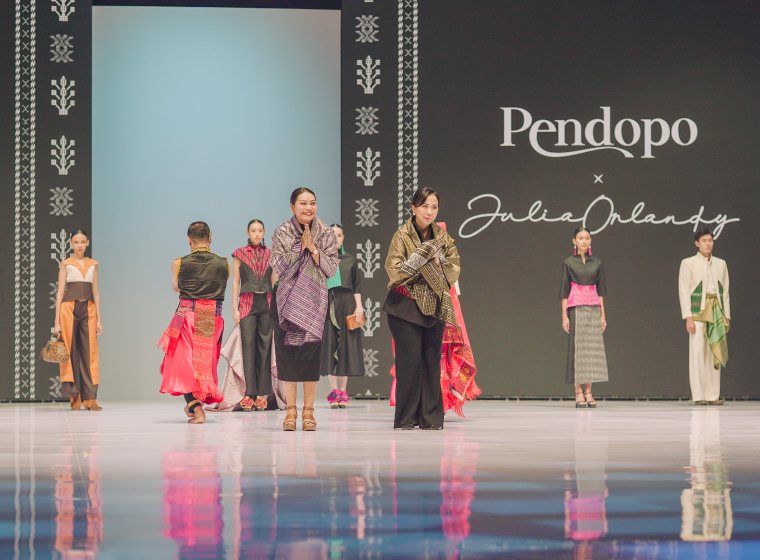
Ni Luh Putu Laura Sarassita, Head of Pendopo, shared what this collaboration means to her. "At Pendopo, we believe every piece of Indonesian wastra carries a story, a value, and an identity worth passing on. Together with Julia Orlandy, we hope 'Nadi di Tondi' can inspire more people to get to know, appreciate, and proudly wear Indonesian wastra as part of everyday life," said Laura.
Through "Nadi di Tondi," Ulos steps forward not as a textile merely remembered, but as a pulse that keeps living, moving with time, and finding its place in the everyday lives of today's generation.